
Norse Mythology in Iceland
Gods, Eddas, and sacred sites in the land where the myths were preserved
Norse Mythology & Iceland
Iceland preserved Norse mythology when the rest of Scandinavia forgot it. While mainland Scandinavians converted to Christianity and gradually lost their pagan literary traditions, Icelanders wrote them down. The Poetic Edda and Prose Edda, both preserved in Iceland, are the primary sources for virtually everything we know about Norse mythology. Without Icelandic scribes working in the 13th century, Odin, Thor, and the entire Norse pantheon would be largely lost to history.
The reasons Iceland became the keeper of Norse myth are rooted in its unique history. Settled by Norse chieftains fleeing the centralizing power of Norwegian kings, Iceland developed an independent literary culture unmatched anywhere in medieval Europe. The country converted to Christianity relatively late (1000 AD) and did so peacefully, with an explicit agreement to tolerate private pagan worship. This pragmatic approach meant that the old stories were never violently suppressed — instead, Christian monks and scholars recorded them, recognizing their literary and historical value.
Key Facts
- —Poetic Edda compiled ~1270 AD
- —Prose Edda written ~1220 AD by Snorri Sturluson
- —Codex Regius manuscript (GKS 2365 4to)
- —9 worlds of Norse cosmology
- —Yggdrasil, the World Tree, connects all realms
- —Ragnarok: the prophesied end of the gods
The Pantheon
- Odin — Wisdom, war, death, poetry
- Thor — Thunder, protection, strength
- Freyja — Love, fertility, magic
- Freyr — Prosperity, sunshine, fair weather
- Hel — Ruler of the dead
- Loki — Trickster, shape-shifter
The Eddas — Sources of Norse Myth
Everything we know about Norse mythology comes primarily from two Icelandic texts: the Poetic Edda and the Prose Edda. These are not religious scriptures but literary works — one an anonymous collection of poems and the other a scholarly handbook. Together they paint the most complete picture we have of the pre-Christian Norse worldview, from the creation of the cosmos to its fiery destruction at Ragnarok.
The Poetic Edda (Elder Edda)
The Poetic Edda is an anonymous collection of Old Norse poems preserved in the Codex Regius manuscript, written on vellum around 1270 AD. The poems themselves are much older, composed orally during the Viking Age and passed down through generations before being committed to writing.
The most famous poem is the Voluspa (Prophecy of the Seeress), in which a dead prophetess reveals the creation and destruction of the world to Odin. The Havamal (Sayings of the High One) presents Odin's wisdom on how to live, including the famous passage where Odin hangs himself on Yggdrasil for nine nights to gain knowledge of the runes. The collection also includes heroic poems about Sigurd the dragon-slayer, which later inspired Wagner's Ring Cycle and, through it, much of modern fantasy literature including Tolkien.
The Prose Edda (Younger Edda)
Written by Snorri Sturluson at Reykholt around 1220 AD, the Prose Edda is a structured guide to Norse mythology intended as a handbook for poets. Snorri was a chieftain, historian, and one of the most remarkable intellectuals of medieval Europe.
The work is divided into three parts: Gylfaginning (The Beguiling of Gylfi), which presents Norse cosmology as a dialogue; Skaldskaparmal (The Language of Poetry), which explains the elaborate metaphorical system of Norse poetry known as kennings; and Hattatal (List of Verse Forms). Gylfaginning provides the most systematic account of Norse mythology, from the creation of the world from the body of the giant Ymir to Ragnarok.

A page from the Codex Regius (GKS 2365 4to), the principal manuscript of the Poetic Edda, preserved at the Árni Magnússon Institute in Reykjavík.
Gods in the Landscape
Norse mythology is not a dead religion in Iceland. It lives on in the landscape itself, encoded in thousands of place names that connect everyday geography to the world of the gods. When you drive through Iceland, you are driving through a mythological map.
Thor
Thorsmork, ThorsaThor, the thunder god and protector of humanity, left his name scattered across Iceland. The most famous is Thorsmork (Thor's Forest), a dramatic highland valley between three glaciers in southern Iceland, beloved by hikers. Thorsa (Thor's River) is Iceland's longest river at 230 km. The god of the common people, Thor was the most widely worshipped deity among Icelandic settlers, and his hammer Mjolnir appears on Viking-age artifacts found across the country.
Odin
AsbyrgiOdin, the Allfather, is associated with some of Iceland's most dramatic landscapes. Asbyrgi, a massive horseshoe-shaped canyon in Vatnajokull National Park, is said to have been formed when Odin's eight-legged horse Sleipnir touched one hoof to the ground. The canyon's perfect symmetry and lush birch forest create an atmosphere of otherworldly calm that makes the legend feel entirely plausible.
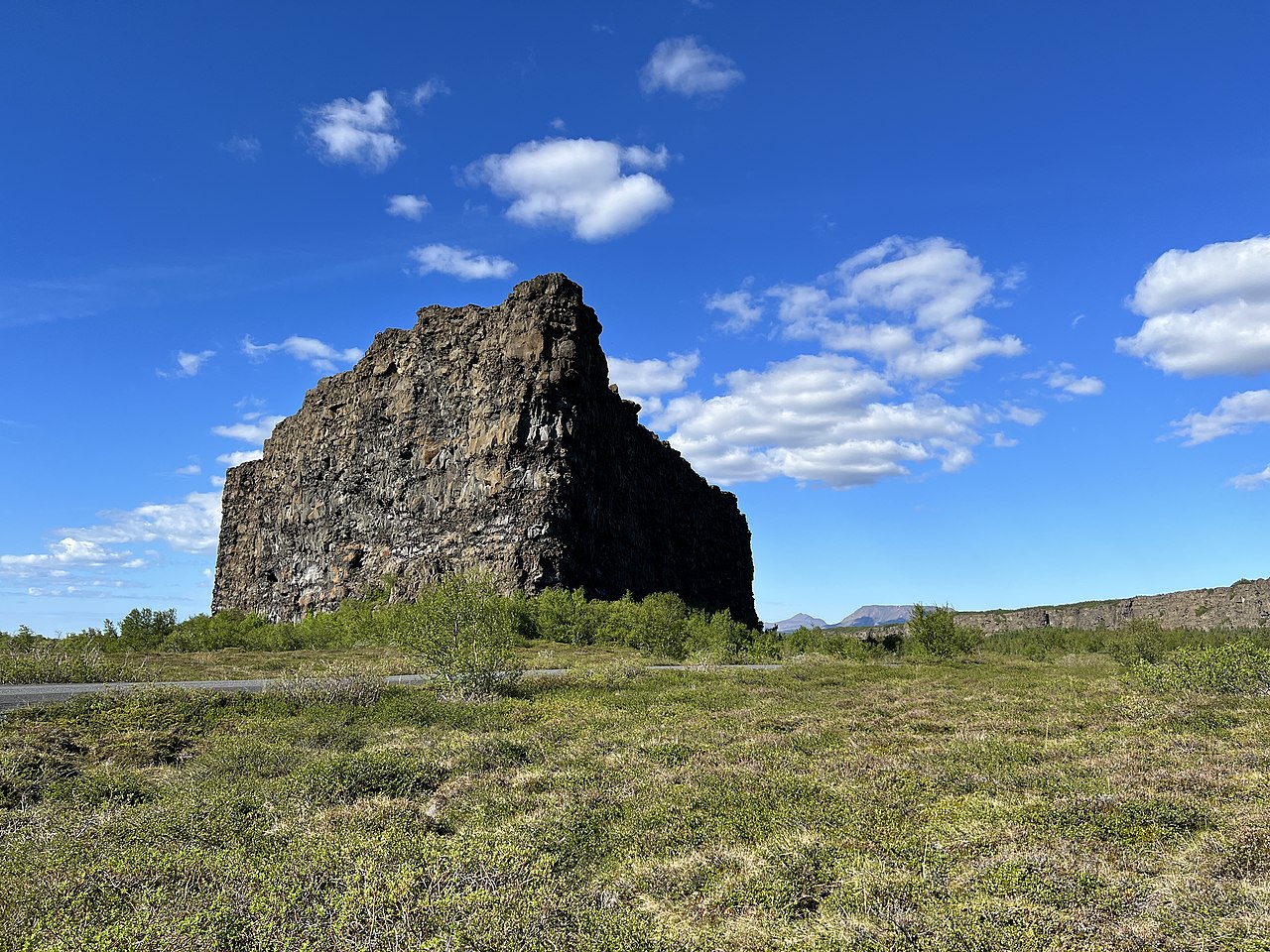
Asbyrgi canyon, the legendary hoofprint of Sleipnir, Odin's eight-legged horse.
Freyr
Freysnes & fertile farmlandsFreyr, the Vanir god of prosperity, sunshine, and fair weather, gave his name to places like Freysnes and other locations associated with fertile land and good harvests. As the god most concerned with the practical needs of farmers, Freyr was deeply important to the agricultural settlers of Iceland.
Hel & Hekla
Hekla volcanoHekla, one of Iceland's most active volcanoes, was called the 'Gateway to Hell' by medieval Europeans. After a catastrophic eruption in 1104, Cistercian monks spread the belief that Hekla was literally one of the entrances to the underworld. The name's resemblance to Hel, the Norse goddess who rules the realm of the dead, reinforced this association. For centuries, European maps marked Hekla with flames and demons.
Sacred Sites You Can Visit
Iceland offers something extraordinary for anyone fascinated by Norse mythology: the chance to walk through the actual landscapes where the myths were told, where the gods were worshipped, and where the decisive break between the old religion and Christianity played out.
Godafoss — Waterfall of the Gods
In the year 1000 AD, Lawspeaker Thorgeir Ljosvetningagodi was tasked with deciding Iceland's faith after the nation split between Christians and followers of the old Norse religion. After meditating under a fur cloak for a day and a night, he declared Iceland would adopt Christianity — but that private pagan worship would be tolerated.
Returning north, Thorgeir performed the most powerful symbolic act in Icelandic history: he took his carved wooden idols of the Norse gods and hurled them into the waterfall on the Skjalfandafljot river. The falls have been known as Godafoss, the Waterfall of the Gods, ever since. Today it stands on Route 1 between Akureyri and Myvatn, a 12-meter horseshoe cascade that is both stunningly beautiful and profoundly historic.

Godafoss, the Waterfall of the Gods, where lawspeaker Thorgeir cast Norse idols into the water in 1000 AD.
Asbyrgi — Sleipnir's Hoofprint
Asbyrgi is a horseshoe-shaped canyon in Vatnajokull National Park, measuring roughly 3.5 km long and 1 km wide. According to Norse legend, the canyon was formed in an instant when Sleipnir, Odin's eight-legged horse, touched one of its hooves to the ground. The canyon floor is covered with a lush birch and willow forest — a startling sight in Iceland's largely treeless landscape. Dramatic 100-meter cliffs surround the area on three sides, and a distinctive rock island called Eyjan rises from the center. Walking through Asbyrgi feels like entering another world entirely.
Snaefellsjokull — The Mystical Glacier
The glacier-capped stratovolcano at the tip of the Snaefellsnes peninsula holds a special place in both mythology and literature. Rising 1,446 meters from the sea, Snaefellsjokull is visible from Reykjavik on clear days and has been considered a place of supernatural power for centuries. It was the entrance to the center of the Earth in Jules Verne's 1864 novel, and many modern visitors describe experiencing unusual energy or heightened awareness near the glacier. In Icelandic mystical traditions, Snaefellsjokull is regarded as one of the world's great energy centers.
The Asatru Revival
In 1972, on a farm in western Iceland, a poet and sheep farmer named Sveinbjorn Beinteinsson led a small group in reviving the worship of the Norse gods. Over fifty years later, Asatru (meaning "faith in the gods") has grown into an officially recognized religion with over 5,000 members and is building the first Norse temple constructed in Iceland since the country converted to Christianity over a thousand years ago.
Sveinbjorn Beinteinsson was a remarkable figure: a traditional Icelandic farmer who was also a master of rimar, the ancient Icelandic art of chanting poetry. Under his leadership, the Icelandic government officially recognized Asatruarfelagid (the Asatru Fellowship) in 1973, making Iceland one of the first countries in the world to grant legal status to the revived Norse religion.
Today the fellowship conducts ceremonies at significant sites including Thingvellir, where the original conversion took place. Members gather for blots (ritual offerings), seasonal celebrations at the solstices and equinoxes, and naming ceremonies and weddings conducted in the old tradition. The community is building a striking new temple on Oskjuhlid hill in Reykjavik, designed to harmonize with the landscape and featuring a central dome open to the sky. When completed, it will be the first purpose-built Norse temple in Iceland since the settlement era.
It is important to note that Icelandic Asatru is explicitly inclusive and progressive. The high priest (allsherjargodi) Hilmar Orn Hilmarsson has been vocal in condemning white supremacist groups who appropriate Norse symbols, stating clearly that Asatru welcomes people of all backgrounds and that racism has no place in the faith.
Frequently Asked Questions
What are the Eddas and why are they important?
The Eddas are two medieval Icelandic texts that together form the primary source for Norse mythology. The Poetic Edda (compiled ~1270 AD) is an anonymous collection of Old Norse poems including the famous Voluspa prophecy. The Prose Edda (~1220 AD) was written by Snorri Sturluson at Reykholt as a guide to Norse mythology for poets. Without these Icelandic manuscripts, most of what we know about Odin, Thor, and the Norse gods would be lost.
Can I visit Norse mythology sites in Iceland?
Yes. Key mythology sites include Godafoss (where Norse god idols were thrown in 1000 AD), Asbyrgi (horseshoe canyon said to be the hoofprint of Odin's horse Sleipnir), Thorsmork (Thor's Forest), Snaefellsjokull (mystical glacier volcano on the Snaefellsnes peninsula), and Reykholt (where Snorri Sturluson wrote the Prose Edda). Most are accessible year-round.
What is Asatru and is it practiced in Iceland today?
Asatru ('faith in the gods') is the modern revival of the pre-Christian Norse religion. Founded in Iceland in 1972 by farmer-poet Sveinbjorn Beinteinsson, it is an officially recognized religion with over 5,000 members. The Asatruarfelagid (Asatru Fellowship) is building Iceland's first Norse temple since Christianization in 1000 AD, located at Oskjuhlid in Reykjavik.