Glaciers
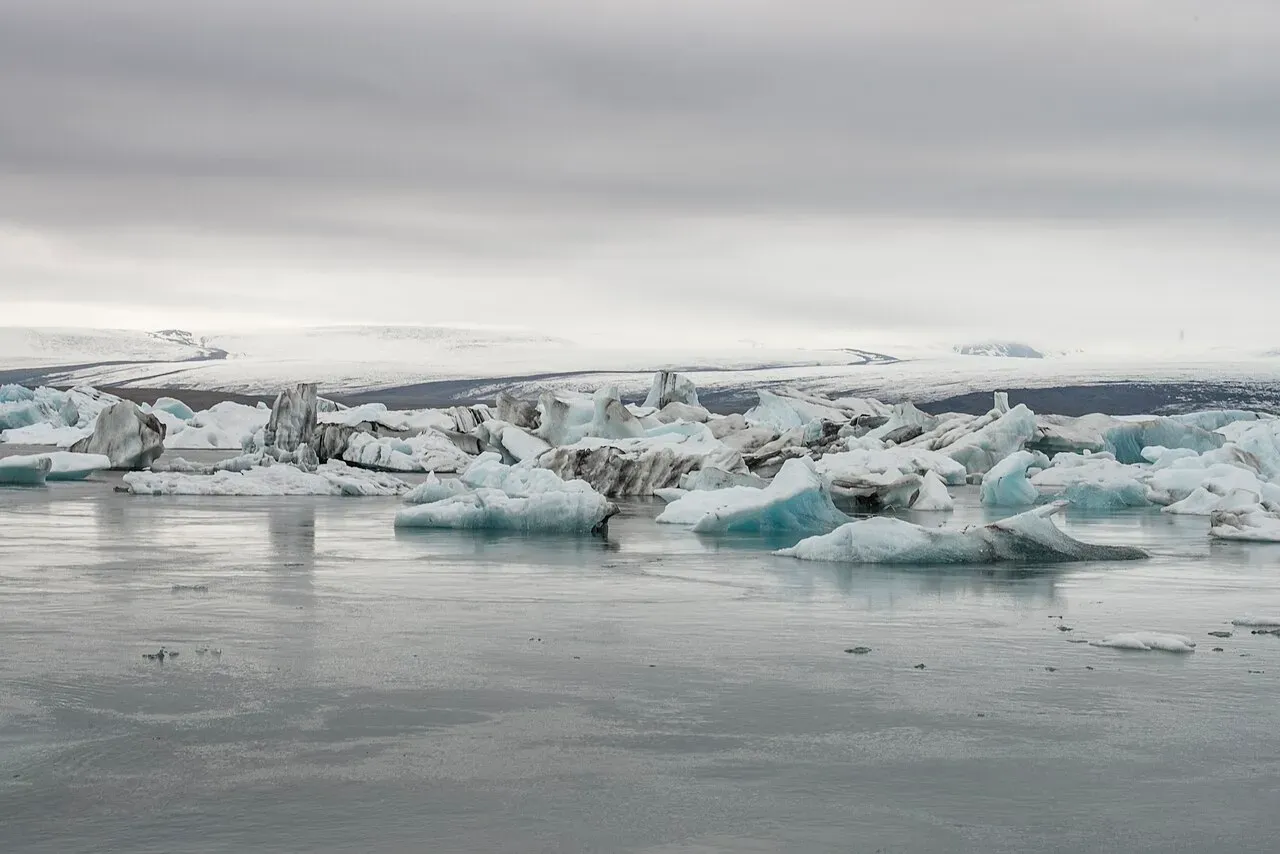
Vatnajökull, glacier lagoons and ice cave season.
Aurora forecasts, viewing spots, photography and safety for seeing the northern lights in Iceland.
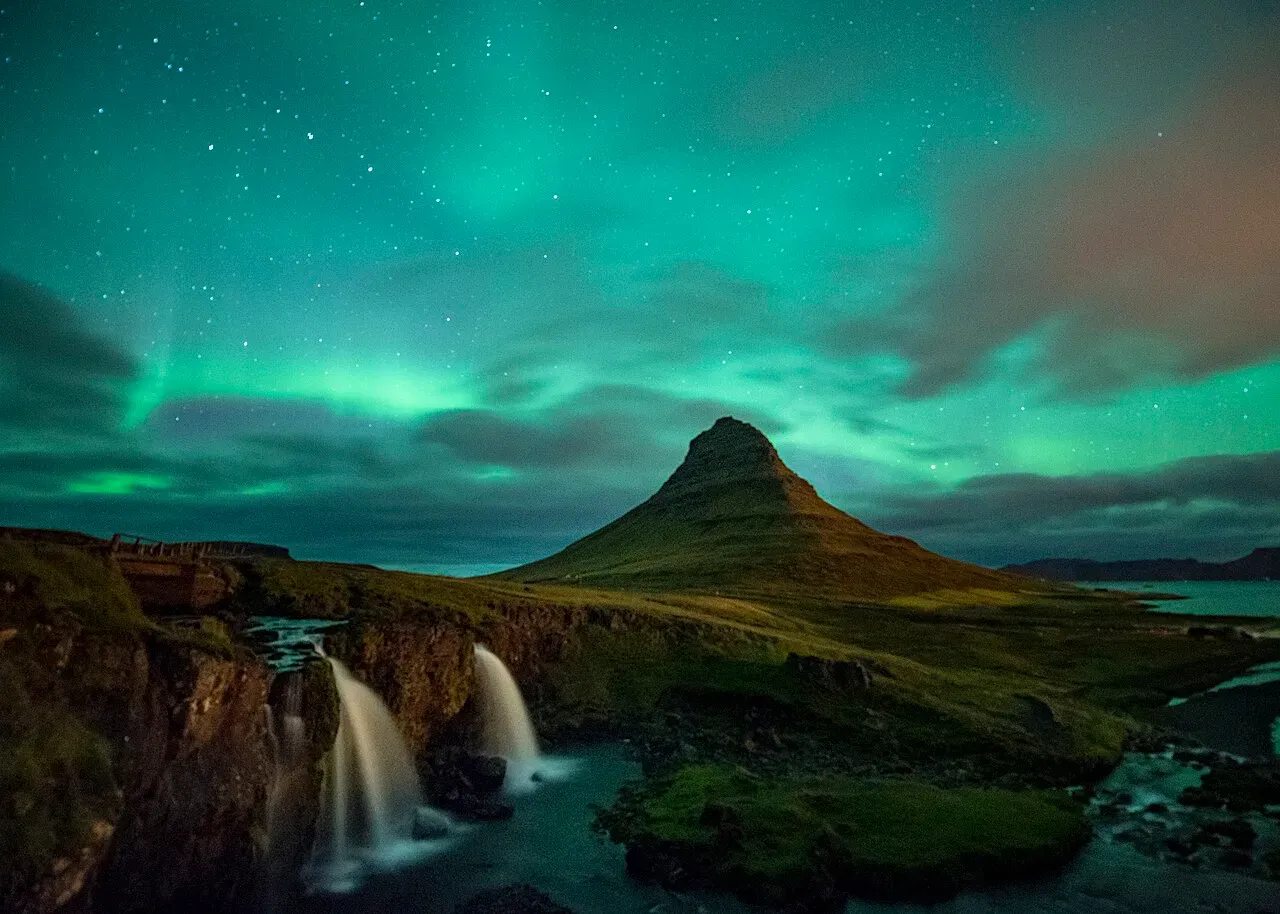
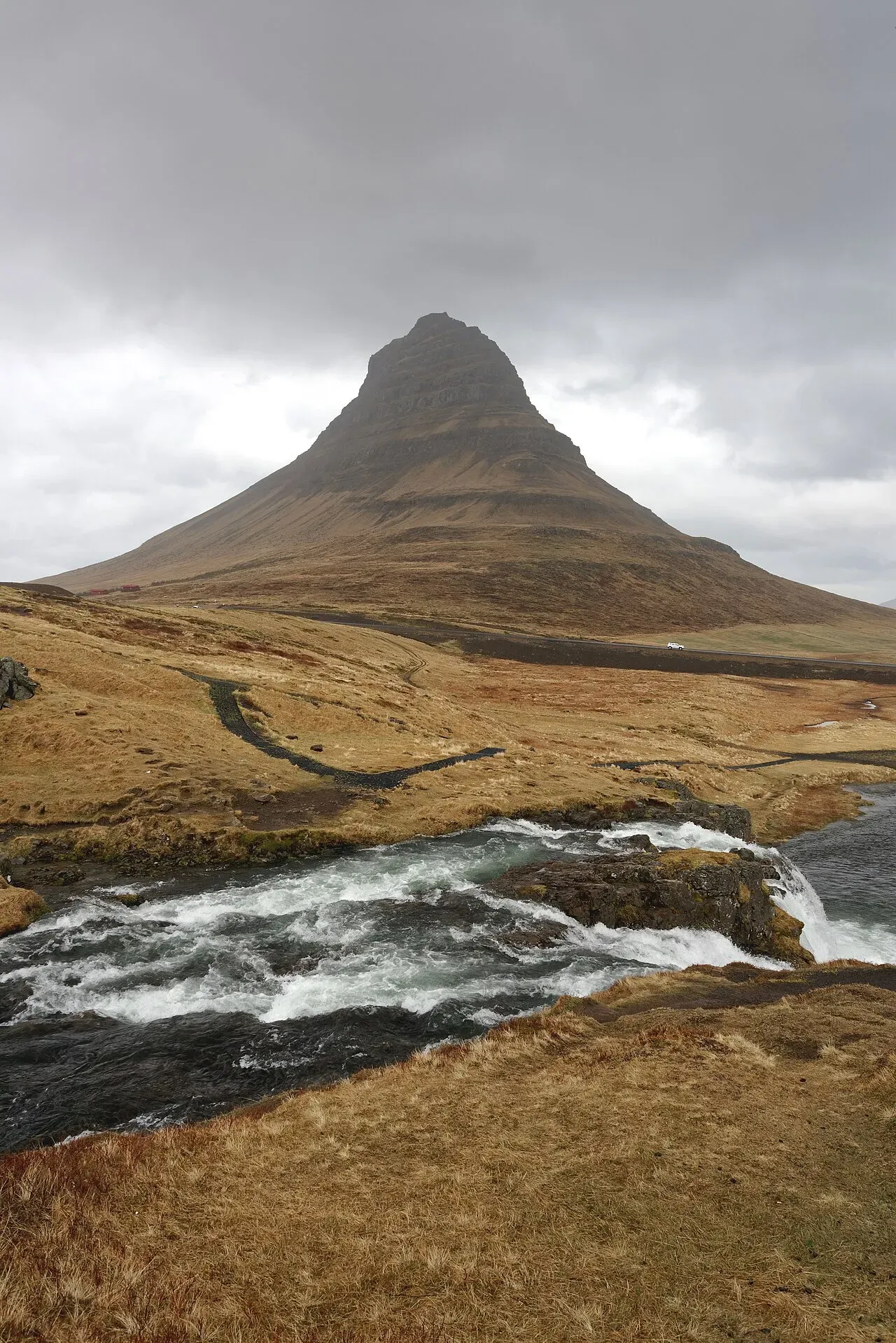
Northern lights over Kirkjufell
The Aurora Borealis occurs when charged particles from the solar wind interact with Earth's magnetosphere and atmosphere. When solar wind particles breach Earth's magnetic defenses, they are funneled along magnetic field lines toward the polar regions. As these high-energy particles collide with atmospheric gases, they produce light.
Solar Wind is a stream of charged particles flowing from the Sun at 400-800 km/s, carrying the Interplanetary Magnetic Field (IMF) with it.
Iceland's position directly beneath the auroral oval makes it one of the world's premier destinations for Northern Lights viewing. On clear winter nights, the sky comes alive with curtains of green, purple, and sometimes red light.
The critical component for aurora activity is the Bz component — the north-south orientation of the interplanetary magnetic field carried by the solar wind.
Bz Southern (Negative):When the IMF Bz component points southward, it can reconnect with Earth's northward-pointing magnetic field. This opens a pathway for solar wind particles to enter Earth's magnetosphere — triggering aurora.
Bz Northern (Positive):When Bz points northward, it aligns with Earth's field, preventing reconnection and blocking aurora activity.
A "Bz flip" from positive to negative can trigger aurora activity within 30–60 minutes. Solar wind data from the L1 point reaches Earth in ~45–60 minutes — when you see favorable Bz values, prepare quickly.
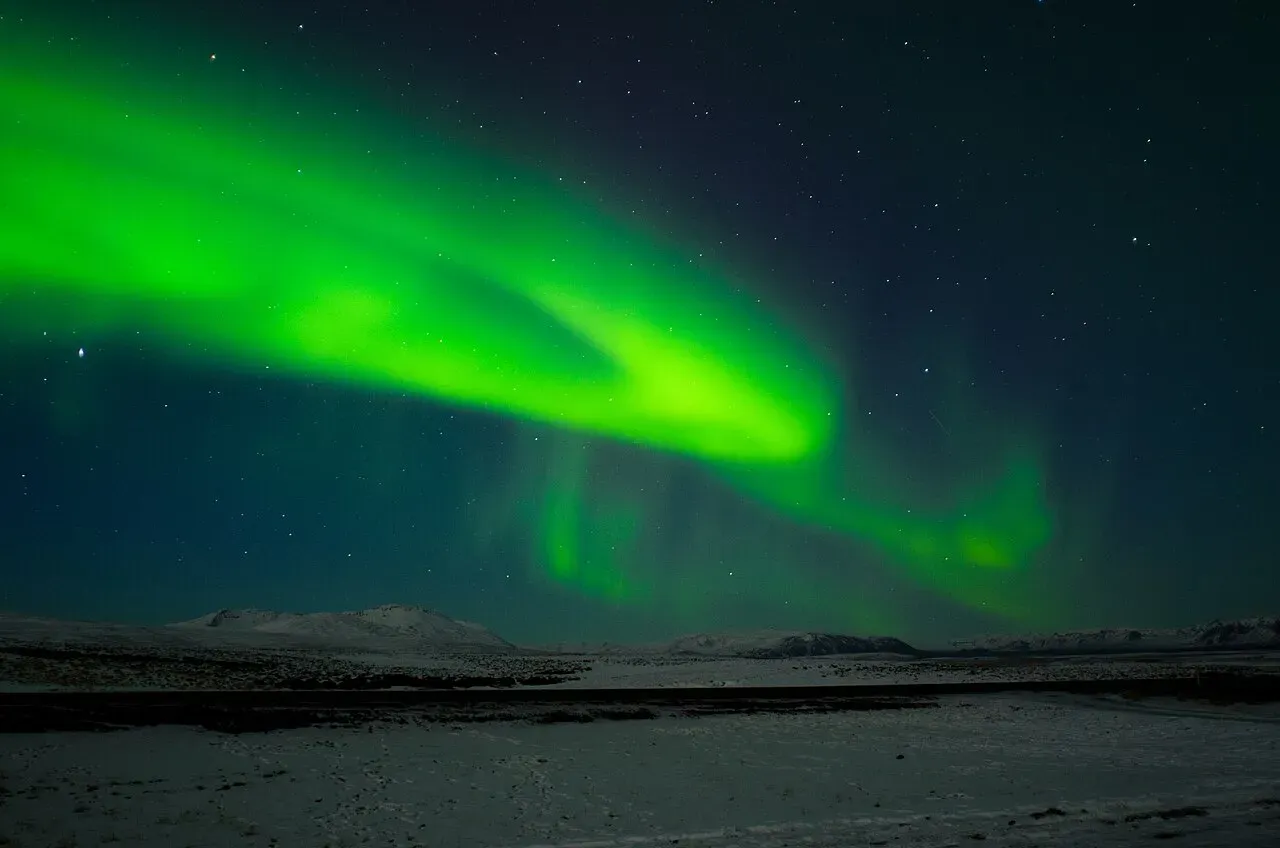
The best displays often occur between 9 PM and 2 AM, when geomagnetic activity peaks and Iceland's dark skies provide the perfect canvas for nature's most spectacular light show. Clear skies and a location away from city lights are the two most important factors you can control.
The KP index measures global geomagnetic activity on a scale of 0–9, updated every 3 hours. It is the most commonly used indicator for aurora visibility.
Iceland's sparse population provides excellent dark sky conditions outside urban areas. Bortle Class 1–2 is best; Bortle 7–8 (Reykjavík area) requires strong geomagnetic activity. Light pollution significantly affects Aurora visibility — even a 30-minute drive from Reykjavík reaches excellent viewing conditions.
| Location | From Reykjavík | Dark Sky | Best Features |
|---|---|---|---|
| Þingvellir National Park 64.255°N, 21.129°W | 45 minutes | Bortle 3–4 | Wide horizons, easy access, parking, facilities |
| Reykjanes Peninsula 63.8°N, 22.7°W | 30–60 minutes | Bortle 2–3 | Coastal views, geothermal features, lighthouse |
| Jökulsárlón Glacier Lagoon 64.078°N, 16.230°W | 5 hours | Bortle 1–2 | Icebergs foreground, pristine darkness |
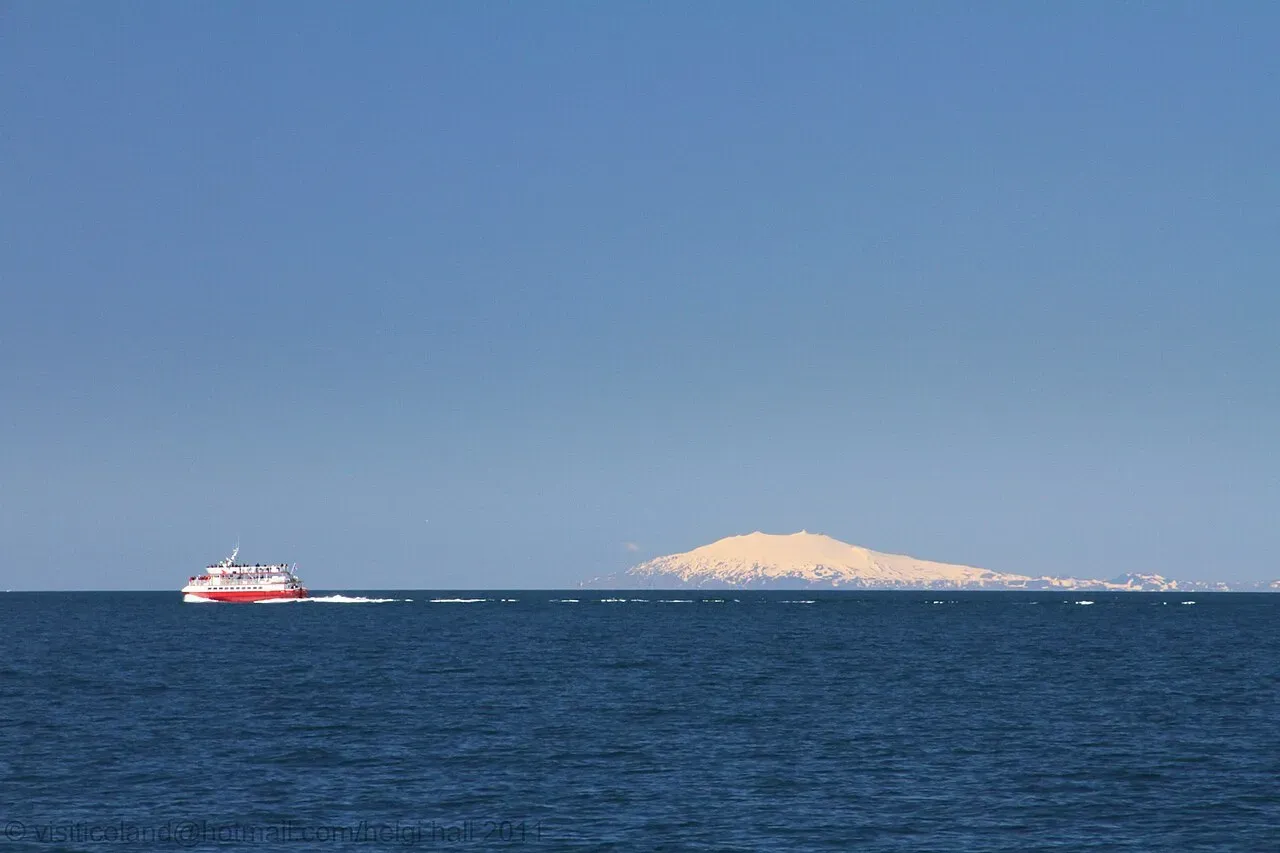
| Snæfellsnes Peninsula 64.8°N, 23.8°W | 1.5–2 hours | Bortle 2–3 | Snæfellsjökull glacier views, Kirkjufell mountain |
| Westfjords 66.2°N, 23.1°W | 4–5 hours | Bortle 1 | Darkest skies in Iceland, dramatic cliffs |
| Vík í Mýrdal 63.4°N, 19.0°W | 2.5 hours | Bortle 3 | Black sand beaches, Reynisdrangar sea stacks |
| Lake Mývatn 65.6°N, 17.0°W | 5–6 hours | Bortle 2 | Geothermal features, pseudo-craters |
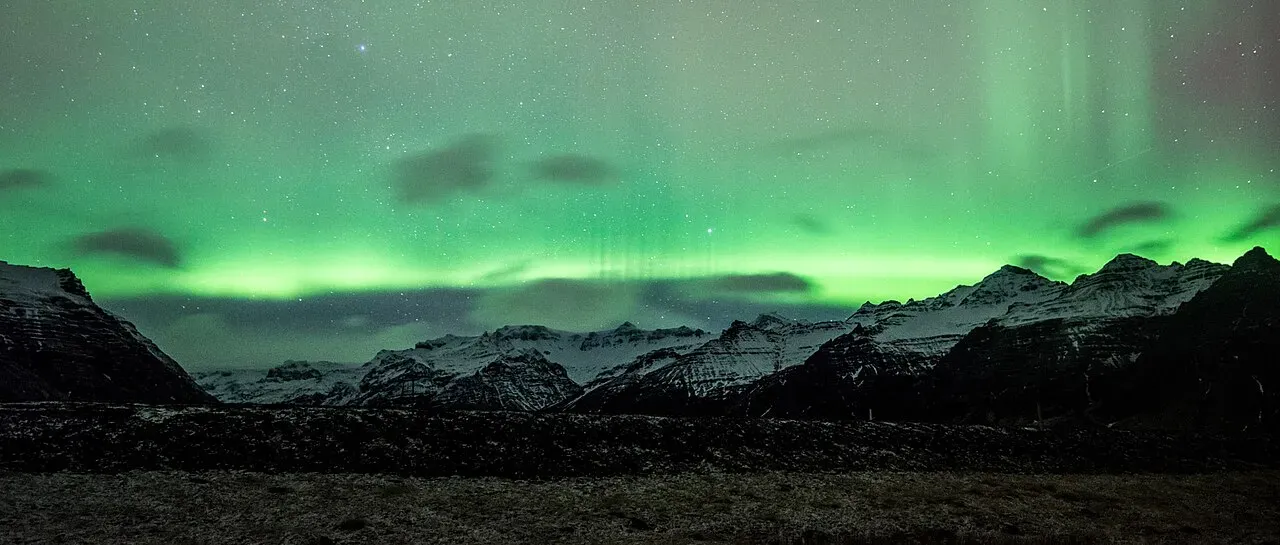
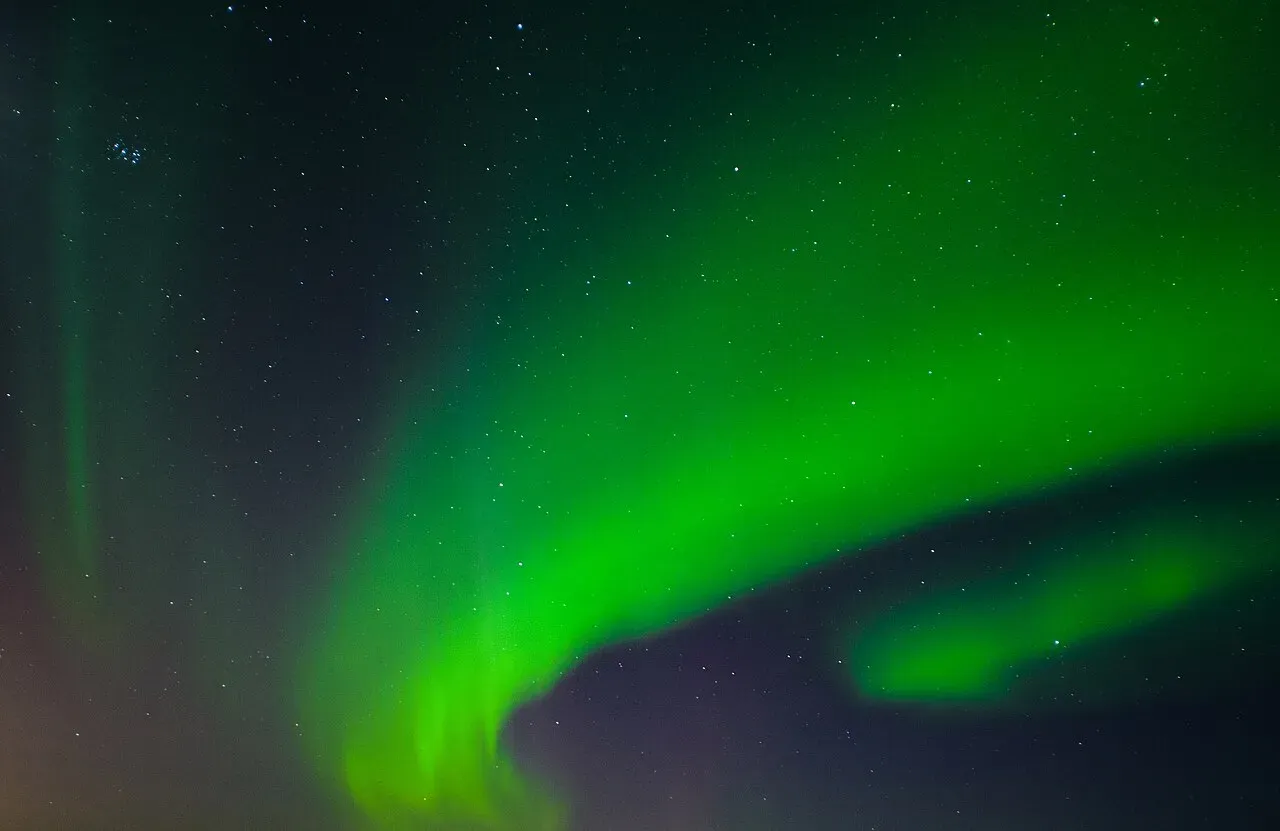
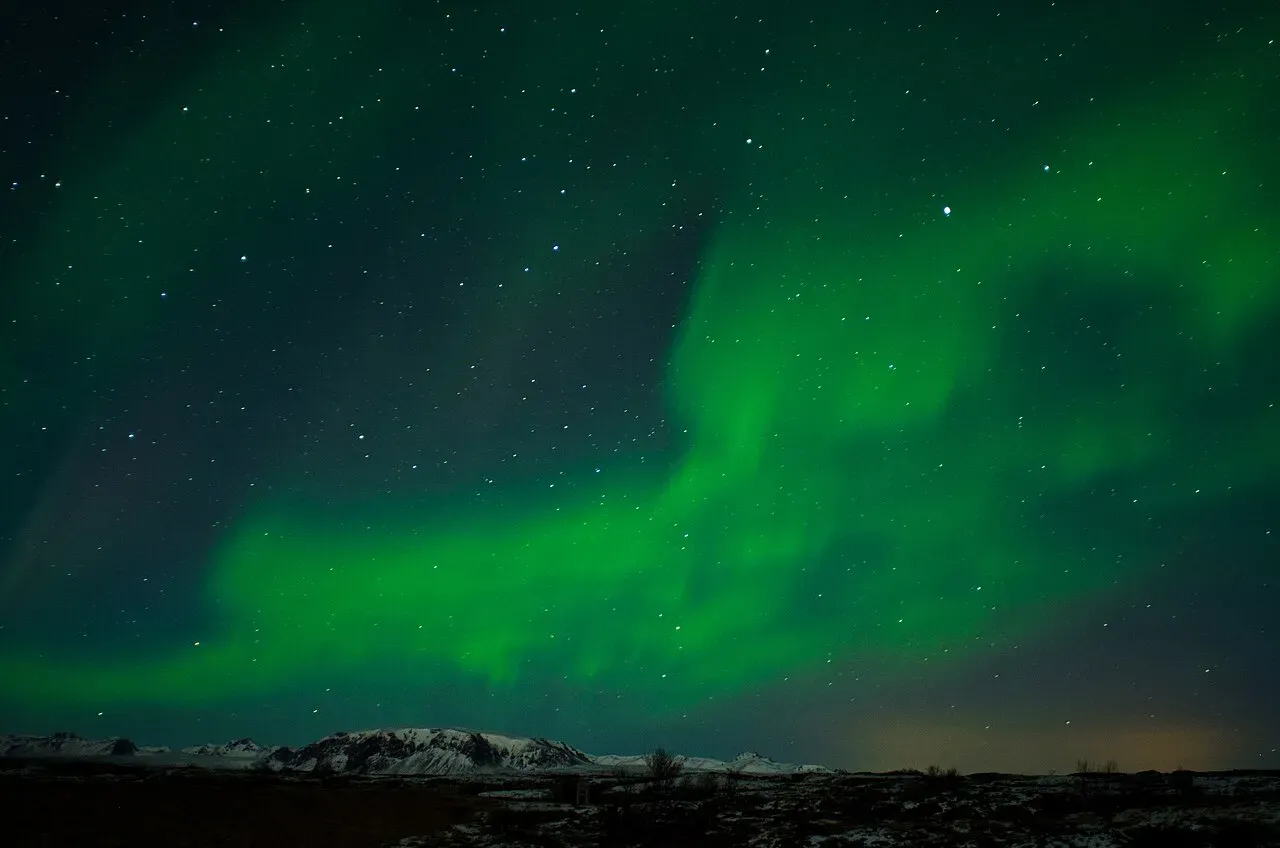
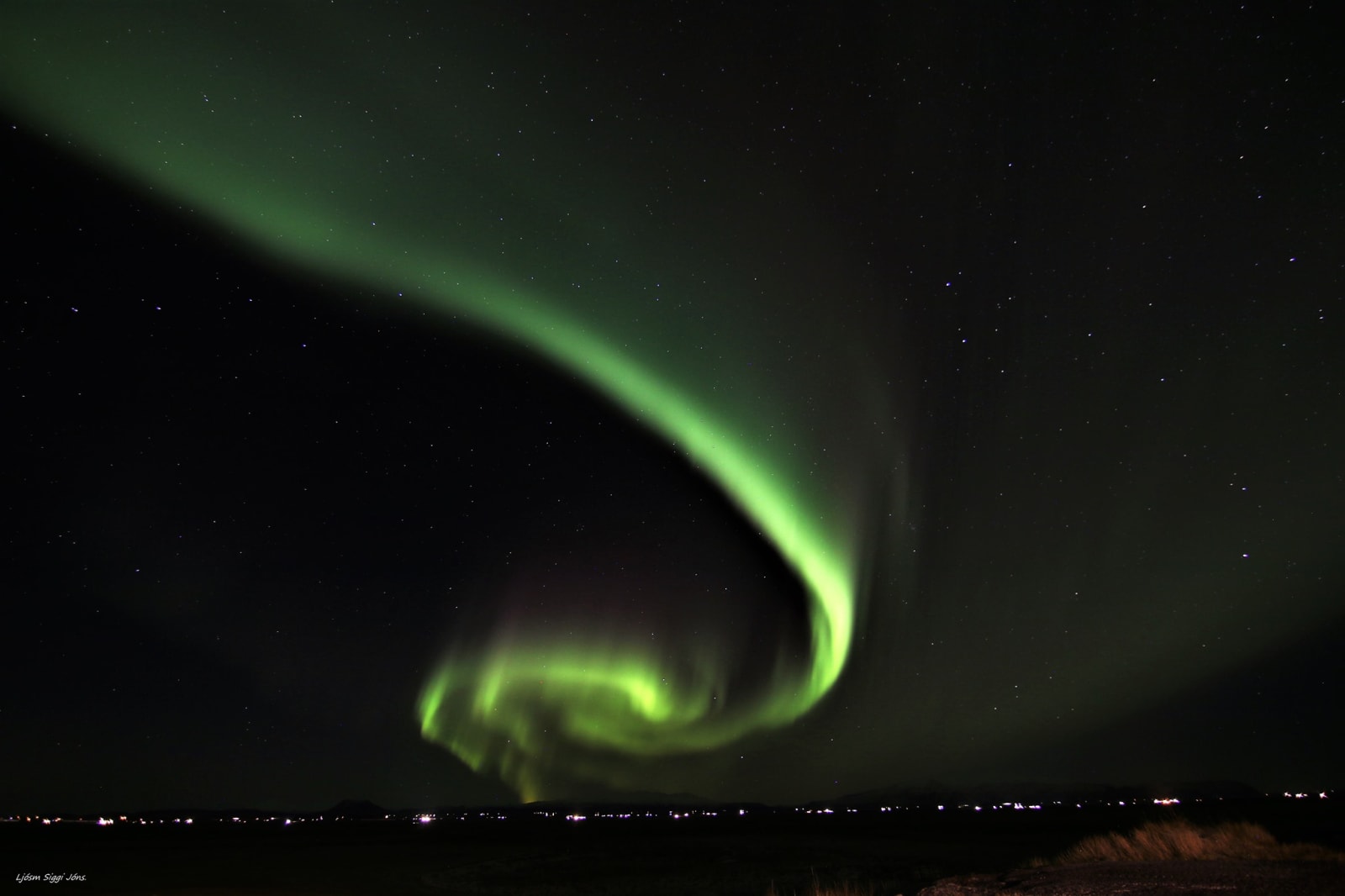
Vivid green aurora ribbons lighting up the Iceland night sky
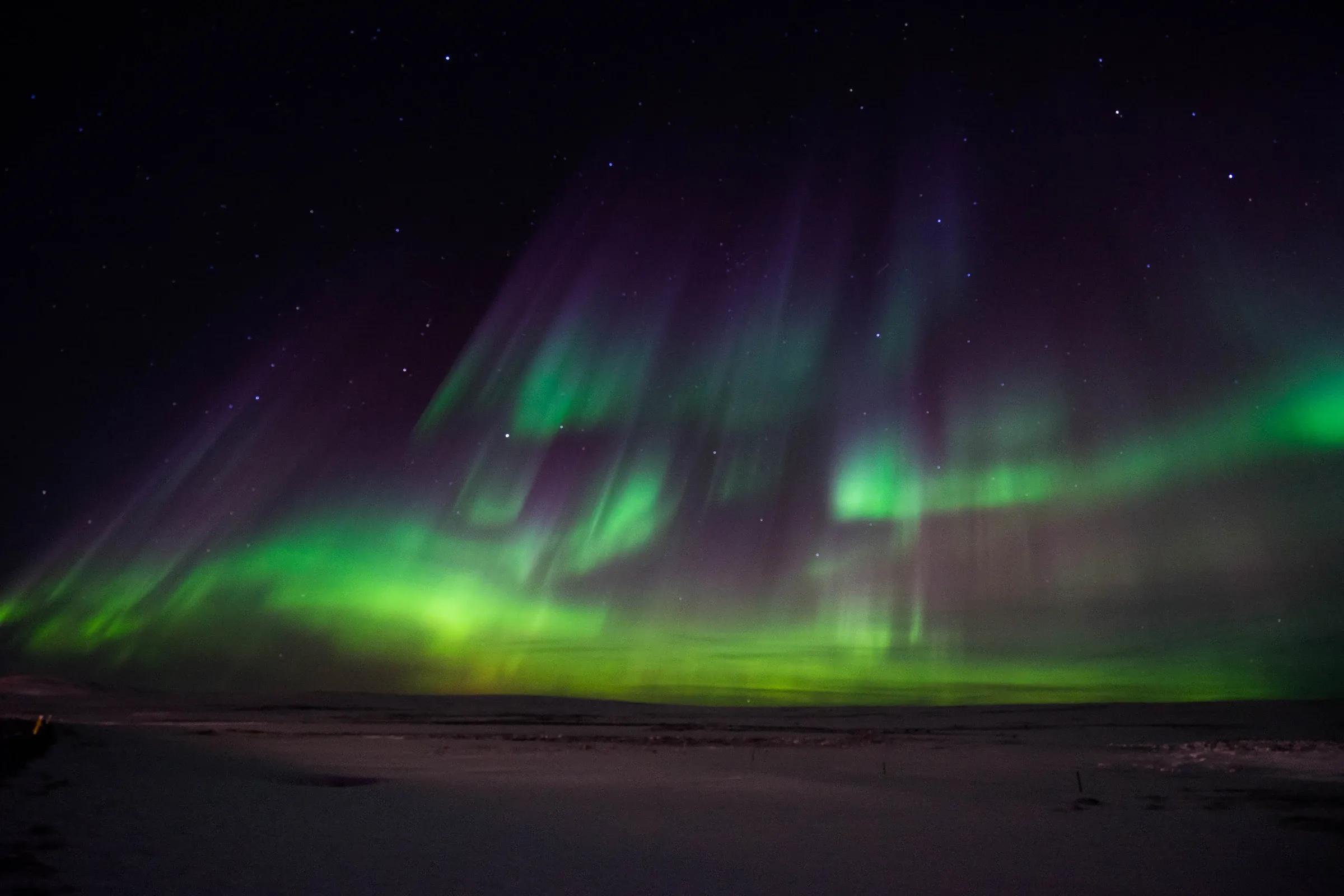
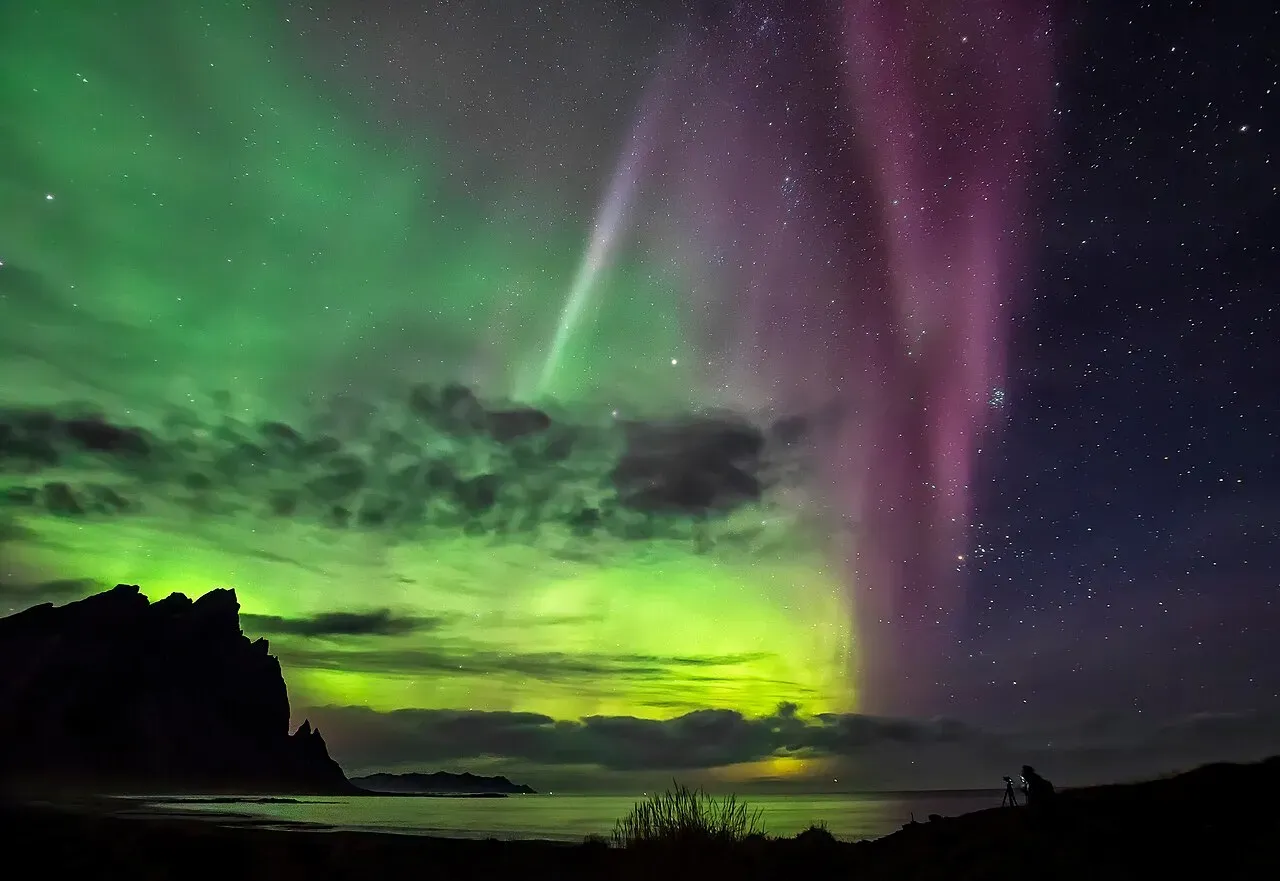
Green and violet aurora bands low over the Icelandic horizon
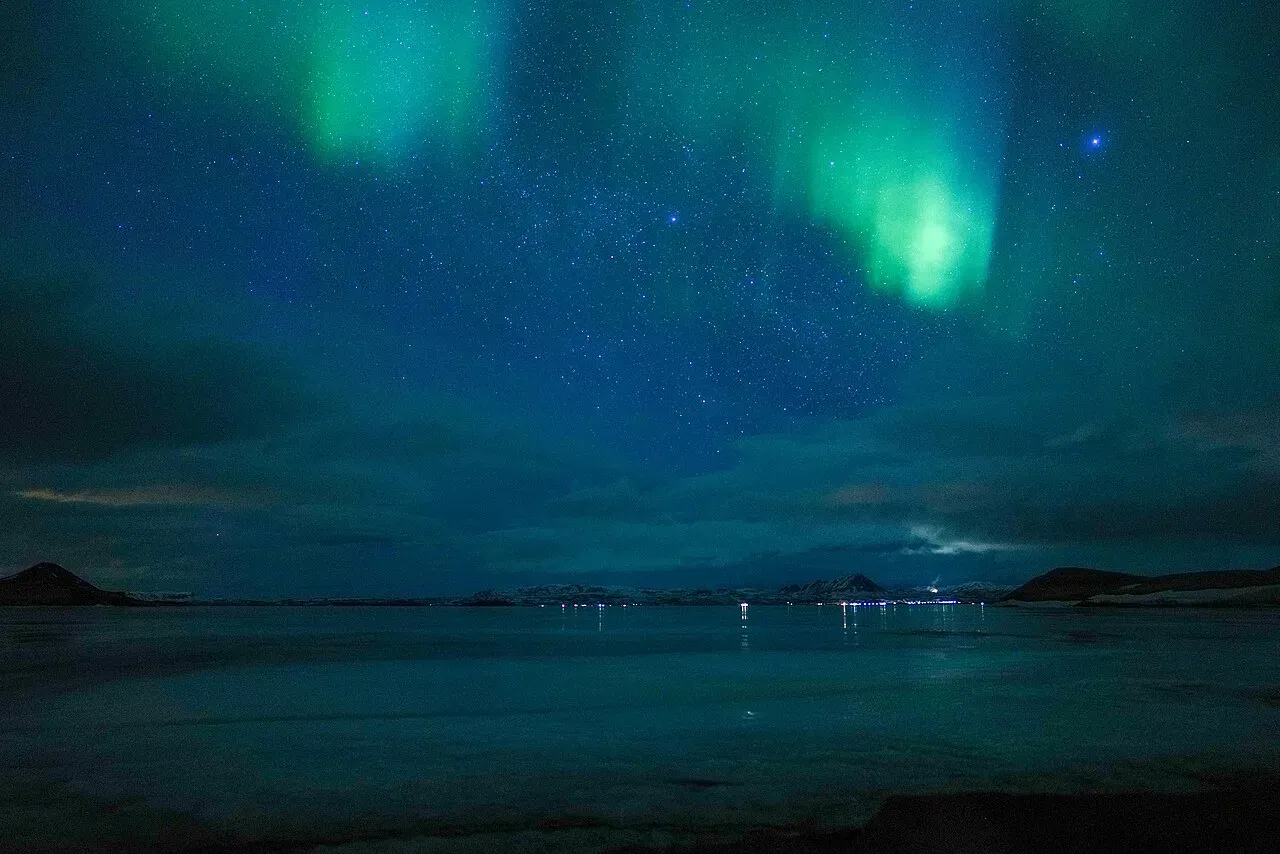
Northern Lights mirrored in the still waters of Lake Mývatn
Always check multiple sources before heading out.
Even with perfect geomagnetic conditions, clouds will block aurora visibility. Iceland's weather is notoriously changeable.
The aurora season in Iceland runs from late August to mid-April, with peak viewing in the darkest months.
Season begins with darker nights returning. Autumnal equinox (around September 22) can increase geomagnetic activity due to solar wind orientation changes.
Peak season with longest nights (up to 19 hours of darkness). Coldest weather but highest aurora probability due to maximum darkness hours.
Excellent activity continues with improving weather. Vernal equinox enhances geomagnetic conditions. Season extends through April when nights become too short.
Aurora hunting takes place in Iceland's harshest conditions. Always prioritize safety over the perfect shot.
Register your travel plans at SafeTravel.is before heading to remote aurora viewing locations.
The Northern Lights occur when charged particles from the Sun interact with gases in Earth's upper atmosphere. These particles are guided by Earth's magnetic field toward the poles, creating the light displays visible in Iceland.
Drive safely when aurora hunting. Pull over safely before stopping — never stop on main roads.