The Icelandic Sagas
Medieval prose masterpieces from the 13th and 14th centuries
What Are the Icelandic Sagas?
The Icelandic sagas are medieval prose narratives written primarily in the 13th and 14th centuries, recounting events that took place during Iceland's Settlement Age and the Viking era. They are widely considered among the greatest literary achievements of medieval Europe, and many scholars regard them as the world's first novels. Written in Old Norse, they remain remarkably accessible to modern Icelandic readers, a testament both to the conservative nature of the Icelandic language and to the enduring power of these stories.
Unlike most medieval European literature, the sagas were composed in prose rather than verse, giving them a strikingly modern narrative quality. They are characterized by their terse, understated style, their complex characters driven by honour and fate, and their unflinching depiction of violence, legal disputes, and the social dynamics of a stateless society. The family sagas (Íslendingasögur) are the most celebrated group, telling the stories of feuding families and legendary individuals from Iceland's earliest centuries, roughly 930 to 1030 AD. Though set in the Viking Age, they were written down two to three centuries later by anonymous authors who blended oral tradition with literary artistry.
📜 Key Facts
- Over 40 family sagas survive
- Written approximately 1200–1400 AD
- Set during 930–1030 AD (Saga Age)
- Composed in Old Norse
- Anonymous authors (with rare exceptions)
- Prose narrative, not verse
🏆 Significance
- UNESCO Memory of the World (Árni Magnússon Collection)
- Often called the world's first novels
- Still read in the original Old Norse by Icelanders
- Foundation of Icelandic national identity
- Major influence on J.R.R. Tolkien and modern fantasy
- Invaluable historical source for Viking Age
The Major Sagas
While over forty family sagas survive, a handful stand above the rest as towering works of world literature. Each combines gripping narrative with profound moral complexity, depicting characters caught between personal honour, family loyalty, and the implacable demands of fate.
Njáls saga — The Greatest Saga
Widely regarded as the finest of all the Icelandic sagas, Njáls saga is a sweeping legal drama set in southern Iceland during the conversion period. At its heart is the friendship between Njáll Þorgeirsson, a wise and prescient lawyer, and Gunnar of Hlíðarendi, a warrior of extraordinary ability and honour. Their bond is tested and ultimately destroyed by the scheming of their wives and the relentless machinery of blood feud. The saga's climax, the burning of Njáll and his family inside their farmstead at Bergþórshvoll, is one of the most harrowing scenes in medieval literature. The story explores themes of law versus violence, the limits of wisdom, and the tragic cost of vengeance in a society without a central authority.
Egils saga — The Poet-Warrior
Egils saga tells the story of Egill Skallagrímsson, one of the most complex characters in all saga literature: a Viking warrior, farmer, and one of the greatest poets of the Old Norse tradition. Believed by many scholars to have been written by Snorri Sturluson himself, the saga follows Egill from his precocious and violent childhood through his conflicts with Norwegian kings and his eventual old age in Borgarfjörður. The saga is remarkable for its psychological depth, particularly its portrayal of Egill's grief at the death of his sons, expressed in the masterful poem Sonatorrek (Loss of My Sons), which remains one of the most powerful elegies in any language.
Laxdæla saga — The Love Triangle
Set in the Dalir district of western Iceland, Laxdæla saga is distinguished by its focus on the emotional lives of its characters, particularly the tragic love triangle between Guðrún Ósvífrsdóttir, Kjartan Ólafsson, and Bolli Þorleiksson. Guðrún, one of the most memorable women in saga literature, is driven by passion and pride to manipulate the men around her, with devastating consequences. When asked in old age which man she loved most, Guðrún delivers the saga's famous final line: "To him I was worst whom I loved most." The saga is also notable for its vivid portrayal of women's experiences and its sophisticated narrative structure.
Grettis saga — The Outlaw Hero
Grettis saga chronicles the life of Grettir Ásmundarson, the strongest man in Iceland and its most famous outlaw. Cursed after battling the undead draugr Glámur, Grettir spends nearly twenty years as an outlaw, living in remote wildernesses and performing extraordinary feats of strength and endurance. His final stand on the island of Drangey in Skagafjörður, where he is hunted down by his enemies and killed through sorcery, is among the most dramatic episodes in saga literature. The saga blends heroic adventure with supernatural horror and deep pathos, exploring themes of isolation, bad luck, and the impossibility of escaping one's fate.
Snorri Sturluson & Reykholt
Snorri Sturluson (1179–1241) is the towering figure of medieval Icelandic literature. A chieftain, politician, and historian, he is the author of the Prose Edda — the single most important source for Norse mythology — and the Heimskringla, a monumental history of the Norwegian kings. He is also widely believed to have written Egils saga, though this attribution remains debated.
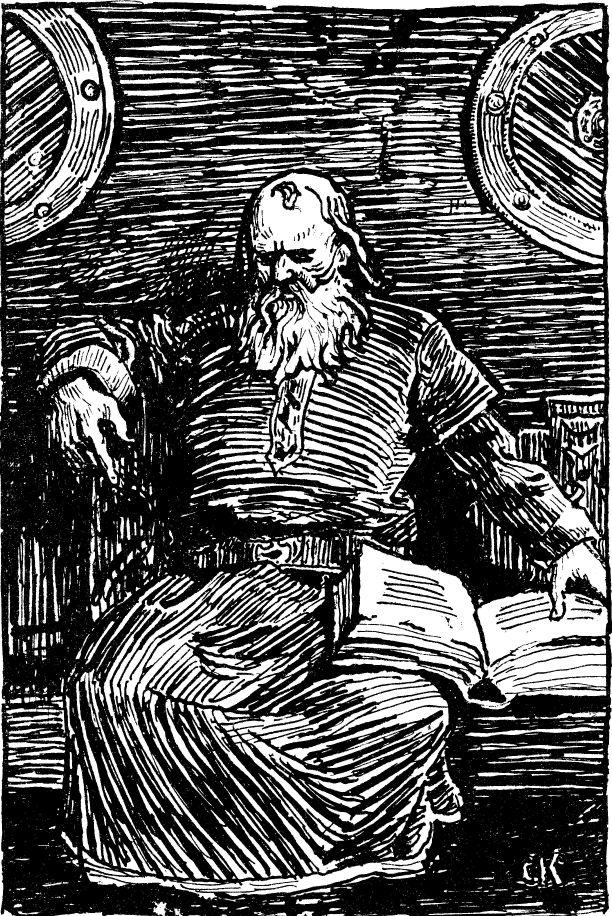
Snorri lived at Reykholt in Borgarfjörður, western Iceland, from 1206 until his murder there in 1241. Reykholt was one of the wealthiest and most powerful estates in medieval Iceland, and under Snorri's ownership it became a centre of learning and literary production. Snorri was twice elected lawspeaker of the Alþingi, Iceland's parliament, and he became deeply entangled in Norwegian royal politics. His assassination, carried out in the cellar of his own home on the orders of King Hákon of Norway, was one of the events that led to the end of Icelandic independence.

Today, visitors to Reykholt can see Snorralaug, Snorri's geothermal bathing pool, which has been in continuous use since the medieval period and is one of the oldest known man-made hot pools in Iceland. The Snorrastofa cultural centre at Reykholt houses an excellent exhibition on Snorri's life, his literary works, and the political intrigues of 13th-century Iceland. The tunnel connecting Snorralaug to Snorri's house has been partially excavated, offering a tangible link to the daily life of Iceland's greatest medieval writer.
Visitable Saga Sites
One of the most remarkable aspects of the Icelandic sagas is that the landscapes they describe are still there, largely unchanged. Visitors can walk the same ground where saga events took place over a thousand years ago, connecting literature with physical place in a way that is almost unique in the world.
🏛 Þingvellir
- UNESCO World Heritage Site
- Location of the Alþingi (parliament, est. 930 AD)
- Setting for pivotal scenes in multiple sagas
- Where Iceland converted to Christianity in 1000 AD
- Dramatic rift valley between tectonic plates
- 45 minutes from Reykjavík on Route 36
📜 Reykholt
- Home of Snorri Sturluson (1206–1241)
- Snorrastofa cultural centre and museum
- Snorralaug medieval geothermal pool
- Excavated tunnel from pool to house
- Located in Borgarfjörður, west Iceland
- About 100 km from Reykjavík
🏡 Stöng
- Excavated Viking Age farmstead
- Buried by the eruption of Hekla in 1104
- Full-scale reconstruction nearby (Þjóðveldisbærinn)
- Gives vivid picture of saga-era daily life
- Located in Þjórsárdalur valley, south Iceland
- Accessible in summer months
⛳ Eiríksstaðir
- Birthplace of Leif Eriksson (Leifur Eiríksson)
- Home of Erik the Red (Eiríkur rauði)
- Reconstructed Viking longhouse on original site
- Costumed guides in summer season
- Located in Haukadalur, Dalir, west Iceland
- Connected to both Saga of Erik the Red and Saga of the Greenlanders
The Manuscripts
The survival of the Icelandic sagas is one of the great stories of literary preservation. Written on calfskin vellum by medieval scribes, the saga manuscripts endured centuries of Iceland's harsh climate, volcanic eruptions, and the general attrition of time. That they survive at all is largely due to the efforts of one extraordinary collector and the scholarly traditions he established.
Codex Regius
The Codex Regius (Royal Manuscript), dating from around 1270, is the single most important manuscript of Old Norse literature. It contains the Poetic Edda, a collection of mythological and heroic poems that forms the primary source for Norse mythology alongside Snorri's Prose Edda. Without the Codex Regius, our knowledge of Norse gods and heroes would be vastly diminished. The manuscript was sent to Denmark in 1643 as a gift to the Danish king, and its return to Iceland in 1971 was a moment of profound national significance.
Flateyjarbók
Flateyjarbók (the Flatey Book) is the largest medieval Icelandic manuscript, written between 1387 and 1394 by two priests on the island of Flatey in Breiðafjörður. It contains the sagas of the Norwegian kings interwoven with shorter tales (þættir) found nowhere else, making it an irreplaceable source for Norse history and literature. Its lavish illustrations and decorated initials make it one of the finest examples of medieval Icelandic book art.

The Árni Magnússon Collection
Árni Magnússon (1663–1730) was an Icelandic scholar who spent decades systematically collecting medieval manuscripts from farms across Iceland, rescuing them from deterioration and destruction. His vast collection, now split between the Árni Magnússon Institute in Reykjavík and the University of Copenhagen, was recognized as a UNESCO Memory of the World in 2009. When the manuscripts began returning from Denmark to Iceland in 1971, thousands of Icelanders lined the harbour in Reykjavík to welcome them home — a scene that demonstrated just how deeply the sagas are woven into the national identity.