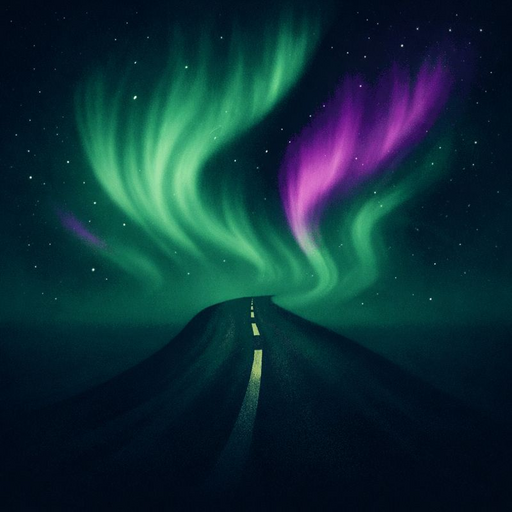
Huldufólk — Iceland's Hidden People
Invisible beings in rocks and hills, woven into the fabric of modern Icelandic life
What are Huldufólk?
Huldufólk, meaning "hidden people" in Icelandic, are supernatural beings who look and live much like humans but remain invisible to most people. They are said to inhabit rocks, hills, and cliffs across the Icelandic landscape, living in parallel communities with their own families, livestock, churches, and social structures. Unlike the diminutive fairies of other European traditions, Huldufólk are full-sized, attractive, and dress in a style that echoes older Icelandic fashions.
The origins of the Huldufólk belief are deeply rooted in Norse and Christian mythology. One popular origin story holds that when God visited Eve, she had not finished washing all of her children. Ashamed, she hid the unwashed ones from His sight. God, seeing through her deception, declared: "What is hidden from me shall be hidden from all." Those concealed children became the Huldufólk, condemned to live alongside humanity but forever unseen.
While the terms Huldufólk and álfar (elves) are often used interchangeably in modern Icelandic, they are technically distinct in older folklore. Álfar tend to be depicted as smaller, more ethereal, and more closely connected to nature magic, whereas the Huldufólk are essentially human in appearance and behavior. Over the centuries, however, the categories have blurred considerably, and today most Icelanders use the terms loosely.
📜 Key Facts
- Huldufólk = "hidden people" in Icelandic
- Live in rocks, hills, and cliff formations
- Look like humans, full-sized and attractive
- Invisible to most people most of the time
- Have their own families, churches, and livestock
- Distinct from álfar (elves) though terms overlap
📊 Belief Stats
- 54% of Icelanders won't deny their existence
- Surveys conducted by University of Iceland
- Pragmatic "why risk it?" attitude prevails
- Only about 8% say they firmly believe
- Majority maintain respectful openness
- Belief rates consistent across generations
Famous Stories & Modern Impact
The belief in Huldufólk is far from a quaint relic of the past. It continues to shape modern Icelandic life in tangible, sometimes surprising ways. Perhaps the most famous examples involve road construction projects that have been altered, delayed, or rerouted to avoid disturbing rocks believed to house hidden people.
One of the best-known cases is the road Álfhólsvegur in Kópavogur, just south of Reykjavík. When a new road was planned through an area containing a large rock formation said to be an elf dwelling, construction equipment repeatedly broke down. After local residents intervened and a self-described elf communicator was consulted, the road was rerouted around the rock. Similar incidents have occurred throughout the country, including in Seyðisfjörður in the Eastfjords, where a large boulder was carefully relocated rather than destroyed during road improvements.
The Icelandic Road and Coastal Administration (Vegagerðin) does not have an official "elf policy," but officials have acknowledged that they take local beliefs into account when planning routes. The pragmatic reasoning is straightforward: avoiding a rock costs little, while angering the local community or inviting negative publicity costs far more. International media has covered these stories extensively, often with a tone of amused disbelief, but for many Icelanders the matter is simply one of cultural respect and practical caution.
Reports of construction equipment mysteriously breaking down near suspected elf dwellings are surprisingly common. Workers have reported flat tires, engine failures, and inexplicable mechanical problems that cease once the offending rock is left undisturbed. Whether one attributes these events to supernatural intervention or to the stress of working in Iceland's harsh terrain, the pattern has become a well-known feature of Icelandic construction lore.

Where to Find Hidden People
Iceland is dotted with locations associated with Huldufólk and álfar, from urban elf gardens to remote rock formations in the Eastfjords. Visiting these sites offers a window into the folklore that has shaped Icelandic culture for over a thousand years.
🏠 Hafnarfjörður Elf Garden
- Just 10 minutes south of Reykjavík
- Hidden Worlds Walk through lava formations
- Guided tours with elf maps of the town
- Hafnarfjörður is known as "the elf capital"
- Dramatic lava park with elf-associated rocks
🏰 Álfaborg, Borgarfjörður Eystri
- Large rock formation in the Eastfjords
- Said to be the queen of the hidden people's castle
- The village calls itself the "elf capital of Iceland"
- Walking trails around and over the formation
- Also famous for puffin colony nearby
🪨 Álfasteinn, Stöðvarfjörður
- A large elf rock in the Eastfjords
- Protected from road construction
- One of many roadside elf boulders in Iceland
- Near the famous Petra's Stone Collection
🏝 Drangey Island
- Dramatic sea stack island in Skagafjörður
- Rich in hidden people legends
- Connected to the saga of Grettir the Strong
- Boat tours available in summer from Sauðárkrókur


The Elf School (Álfaskólinn)
In a modest house in Reykjavík, Magnús Skarphéðinsson has been teaching people about elves and hidden folk since the 1990s. The Álfaskólinn, or Elf School, is one of Iceland's most unusual cultural institutions, attracting tourists, journalists, and academics from around the world.
Magnús, a historian and folklorist, has spent decades collecting firsthand accounts from Icelanders who claim to have encountered Huldufólk. His archive runs to thousands of testimonies, and he uses these as the basis for his lectures, which typically last around four hours and are accompanied by generous servings of Icelandic pancakes and coffee.
According to the Elf School's teachings, there are 13 distinct types of elves and hidden people in Icelandic tradition, ranging from the human-like Huldufólk to smaller, more mischievous beings. Students learn about the habits, dwellings, and temperaments of each type, as well as the proper etiquette for interacting with them. Graduates receive a diploma certifying their knowledge of the hidden world.
While some visitors attend the Elf School as a lighthearted tourist activity, others come with genuine academic interest in Icelandic folklore. Magnús takes his subject seriously and presents the material with conviction, regardless of whether his students are believers or skeptics. The school has been featured in documentaries, news reports, and travel programs worldwide, making it one of Reykjavík's most distinctive cultural experiences.
Cultural Context: Why the Belief Persists
To outside observers, Iceland's Huldufólk tradition can seem puzzling. How does a modern, highly educated, technologically advanced society maintain such a widespread openness to the existence of invisible beings? The answer lies in a combination of landscape, history, isolation, and cultural identity.
Iceland's landscape is unlike anything else in Europe. Vast lava fields, towering cliffs, steaming geothermal vents, and glaciers that groan and shift create an environment that feels genuinely alive and unpredictable. In such a setting, the idea that rocks might house invisible communities feels less absurd than it would in a tidy suburban neighborhood. The landscape itself seems to invite wonder, and the Huldufólk tradition is one expression of that wonder.
Iceland's small population, roughly 380,000 people scattered across an island the size of Kentucky, has preserved an unusually strong oral tradition. Stories pass directly from grandparents to grandchildren. The Icelandic language has changed so little over the centuries that modern readers can still engage with medieval texts, creating a living connection to the past that most cultures have lost.
The Huldufólk belief also represents a form of environmental ethics. Treating rocks and hills as potential dwellings of invisible beings encourages respect for the natural landscape. In a country where erosion is a serious concern and the ecosystem is fragile, this attitude of caution and reverence serves a practical purpose, whether or not one takes the supernatural element literally.
Perhaps most importantly, the Huldufólk tradition is a marker of Icelandic cultural identity. In a world of increasing homogeneity, maintaining a unique folklore sets Iceland apart. The belief is not about literal credulity but about cultural preservation, a refusal to let rationalism strip away the stories that make a place meaningful. As many Icelanders put it when asked about the hidden people: "I don't believe, but I don't not believe either."